Pearl dust
Sem Benelli
Translated from the Italian
On the Ponte Vecchio in Florence — at least when I was a boy — in those little box-like windows that look like prompters’ hoods, in those tiny shops lit from below by the reflections of the Arno, there was, in the way of gold and silverwork, precious stones, hardstones and pearls, a little of everything: fine things and flawed things and rejects; real and fake; in fashion and out of it.
Deals were struck there with the whole world; and there, after a stop at the pawnshop, the embittered treasure of the poor arrived in trembling hands, wrapped in a little cotton wool and a little tissue paper: and the shaking hand took back a few lire, the last of a paradise lost.
Up in the little attics and garrets lived the goldsmiths, the solderers, the founders, the chasers. Nestled there too were the brokers, the shrewd and crafty appraisers — many had nicknames: Baffino, il Trinca; even the family names sounded like nicknames: il Piazzesi, il Bencino — and there, like fowlers with their lime-twigs and decoy owls, sat the merchants, expert in everything, hard, distrustful, stubborn by nature, who had seen so many faces of the great human tragedy of vanity come before them, pleading or blissful; who no longer believed in anything but money, and even that with contempt.
And yet they had, for those precious things — even when they were of little worth, even when they were the remnants of happiness struck by misfortune — a great love. Certain insignificant little objects, certain badly flawed stones, chipped and defective, they would not even sell: they kept them for themselves, out of compassion.
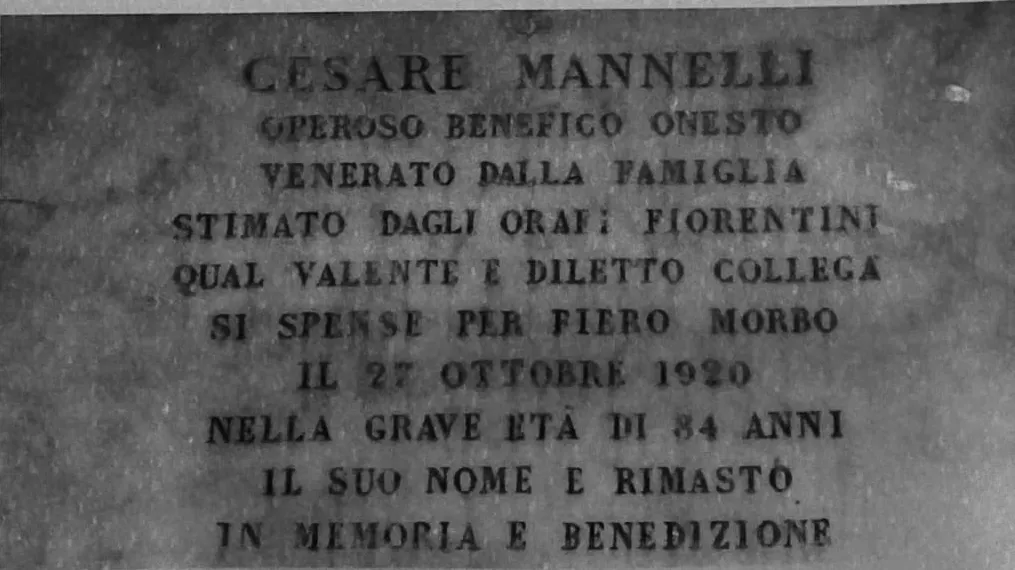
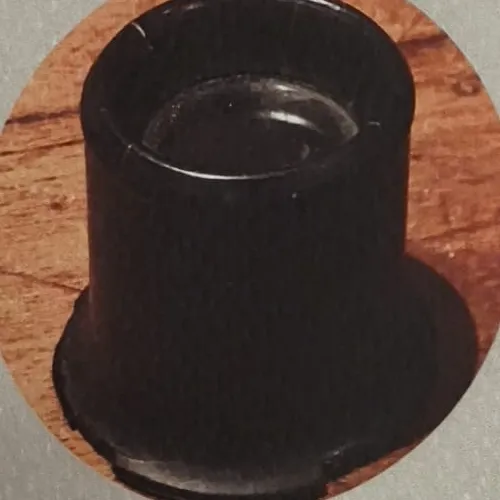
My father, who lived by that trade and was a respected connoisseur, often sent me to the shop of a friend of his on the bridge, so that I would grow fond of it. Every day, in the break between the morning lessons and the afternoon ones, since we lived outside the city gates, I would go and eat my lunch in the shop of a certain Mannelli, who said perhaps fifty words a month and always kept a goldsmith’s eyeglass screwed into his left eye, as if it were a living part of his head, bone and all.
When he took it out, you wanted to screw it straight back around the widowed eye, which begged for it in tears.
As a boy I hardly ever spoke either; so we never said a word to each other. But now and then, all of a sudden, in a voice that seemed to come from far away, that good man would say to me: “Benellinooo…”
With that drawn-out word he meant to tell me, and did tell me, great things: the affection he had for me, the son of his best friend; the hope that I too would end up there, with that extension of the eye; the pleasure he felt in noticing that I too hardly ever spoke; and above all he meant to tell me: resign yourself, this is life, don’t fool yourself.
I loved him dearly: he was fat and slow like the Buddha (but flabbier, because the Buddha, who knew the truth, enjoyed excellent health). He read the faces of the people who came into the shop like a soothsayer: and who knows how many things he knew and did not say.
The goldsmiths’ boys came with their settings — sometimes still held in the pitch on the stick — and said: “Would you have a stone for this ring?” “Would you have a drop like this, for a pair of earrings?” “I need an aquamarine to match this one.”
If he answered nothing, it meant he didn’t have it. If he thought he had it, he would pull out one of his many drawers, where he kept his disorder in order. Nothing matched: everything had come loose from thousands of jewels that were finished, lost or melted down.
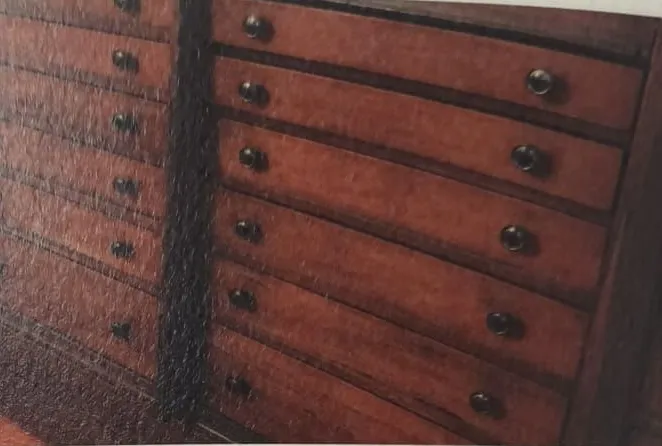
In that little shop it could happen that a precious stone, joined for years or for centuries to another and then parted from it, found it again there, in that sorrowful place of farewell to so many beloved things; and that suddenly, as if by miracle, it lit up with new life and springtime: new vows, new loves, new smiles.
Of fine gems good Mannelli had few: he was not rich; but his drawers were full of unfashionable stones of little value. Much of that stuff, which I liked so much, came back into favour later; but at the time it cost little. People asked him for it to mend old and even antique jewels, or to make imitations.
His greatest treasure was a great many amethysts, wrapped in double sheets of pale blue paper, artfully folded, so that they would stand out better. He had many topazes, burnt ones too, folded in straw-yellow or black paper; he had a few emeralds, which cost less then than now; a few fine turquoises; some enchanting hyacinths; the odd rare ruby and a few pearls, most of them baroque.
Most of all he was rich in hardstones: worked malachite; fine carved lapis lazuli for bosses and showy ornaments. And he had a vast quantity of onyx, carnelian and agate — as beads, as lozenges, that is, shaped as stones for rings — and thousands of them engraved with coats of arms, keenly cut, or with heads in relief, in profile or full face, or with endless symbols.
How much history, how much pride brought low or broken; how much humiliation, and what weeping: fallen stones! The pinker ones, the redder, the more sensual, seemed the living flesh of dramas that set me dreaming.
He also had boxes full of garnets that seemed to be in mourning: faceted beads for necklaces or drops; he had a great many paste stones for cheap rings, for bracelets, for showy jewels, for buckles and clasps; and crates brimming with coral necklaces: foreigners bought them above all as souvenirs, and so did country brides; and so the sight of them made me think of fresh skin, sunlit and fragrant.
And he had cameos of every sort and variety. All of mythology was on those pompous ornaments. It is hard to find an old cameo without a mythological subject.
I saw everything, or rather I felt everything, because it entered me like a mysterious feeling; and I had filled myself with that beauty shadowed by melancholy.
And I watched the people go by on the bridge, which seemed to span two civilisations: the one beyond the Arno — quarrelsome, resentful, stubborn, restless, with our old factious history in its nerves — and the more yielding one on this side of the Arno, eager to please foreigners. It seemed to me that the people passing outside must, one day or another, inexorably enter one of those shops and leave there the tokens of their loves, their pride, their follies.
I remember the rainy winters: the procession on the bridge came and went as if driven by an implacable fate, wearing away with its fateful steps the paved street, which gave that mud the Florentines called piaccichiccio, as though it were birdlime meant to hold fast, on that tragic bridge, every longing and every hope.
At certain times Mannelli’s son worked pearls: and I watched. It was work that spoke to my spirit; but I did not understand what it was saying. Today, remembering, I understand something of it.
The young craftsman tried to turn the lumpy shape of baroque pearls into something as round as possible. He had a tiny hand lathe, fixed to the bench, on which he spun the pearl, threaded on an awl. With the thumb and forefinger of his right hand, protected by two fingertips cut from old gloves, he brought a very fine strip of sandpaper against the spinning pearl; and with it he filed down the pearl’s bumps, little by little, trying to round it without spoiling its layer-upon-layer make-up, or putting out the miraculous light the gem had brought with it from the bottom of the sea.
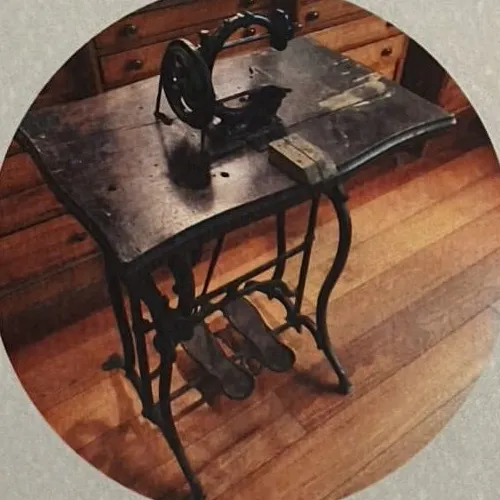
He looked like a cunning wizard, hungry for perfection. The filings of the pearls fell to the floor: an almost impalpable powder. That operation seemed to me both a sacrilege and a spell.
Where was the pearl? Had that gentle work of the sea been filed away entirely, to the very last particle, the pearl would still have remained in that last, almost spiritual residue, because the filings fallen to the floor were pearl dust; but not a pearl, and still less that pearl. A sophism?
One day, when the shop door was open, a sudden gust of wind flung open the window over the Arno, caught the little heap of white powder and threw it out onto the bridge. A bearded man was passing at that very moment: his face was speckled, his beard floured, his spectacles misted over. That man has stayed in my memory ever since.
“What is this stuff?” he shouted. “Why, it’s pearls!” said the goldsmith, knowing full well he meant something else, and yet telling the truth: Florentine wit.
The bearded man wanted to see and understand: he came into the shop, looked at the machine, understood, and cried out in rapture: “It really is pearl! The substance of pearls! And more than pearl, because it is no longer subject to the vanity of form: it is freed from original sin: it is the quintessence: the pearl of pearls!”
And he took a pinch of that powder, asked for an envelope, put it inside, hid it in his wallet — which he tucked against his chest — and went off happy, talking to himself. He had invented pearls!
Today, so many years later, I think that gentleman resembled certain critic-philosophers of ours who seek Pure Art, and to find it crumble the work of art to pieces: they turn it to dust.
Pearl dust, but not pearls! Pollen taken from the flower, but not the flower! A detail, sublime perhaps, but a detail of an organic whole, an indefinable creation — humps and crookedness and all — a round pearl or a baroque one; but alive, alive with vital blood, with natural suffering, with essential passion, with creative rapture and with genius!
Sem Benelli, from “La mia leggenda”, 1939